
Who is a Pathologist?
Understanding Your Bill
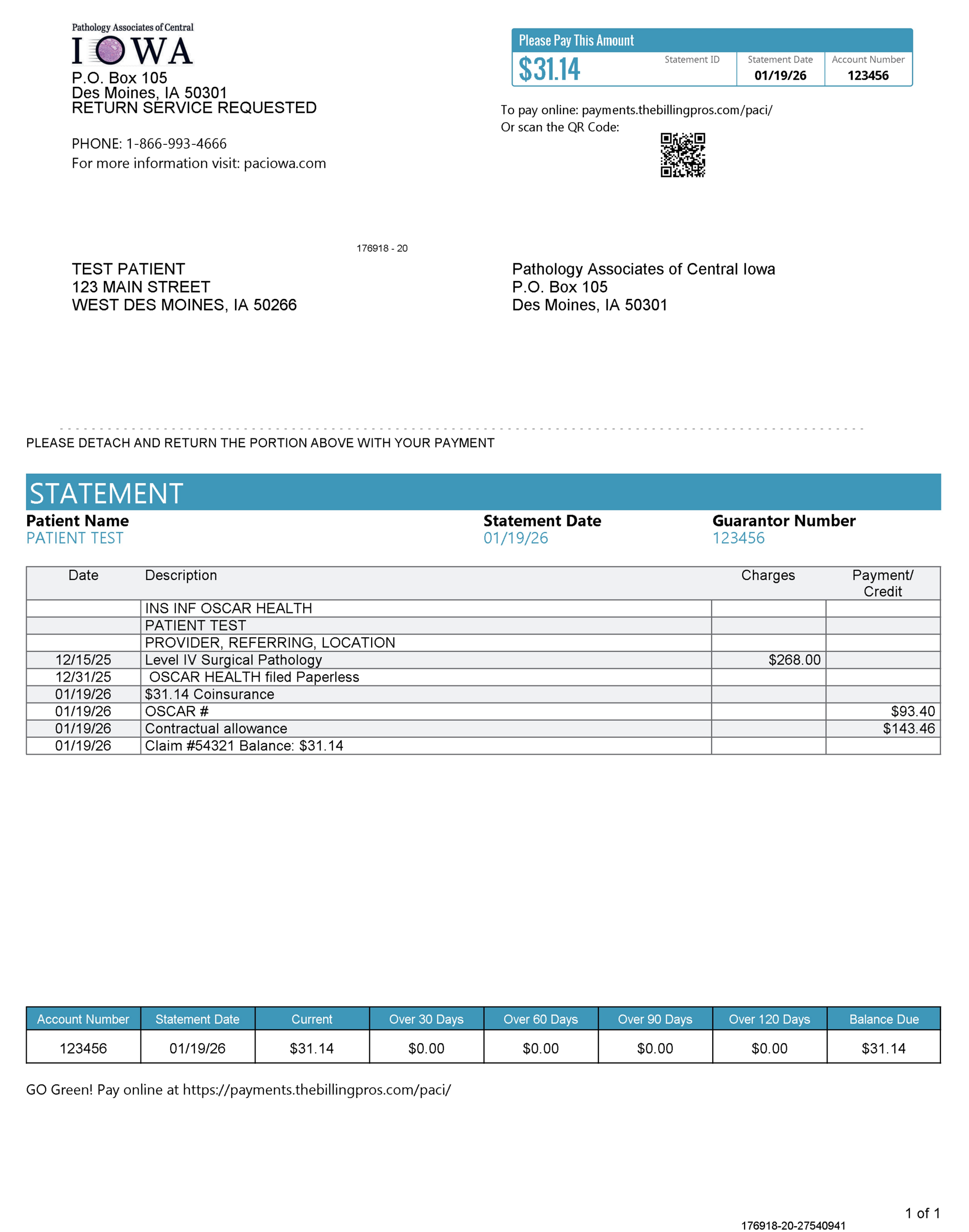
On occasion, additional charges may occur if the pathologist must order additional tests to render a final diagnosis. In certain instances, the pathologist may seek a second opinion from an outside laboratory on your case.
Sample Bill
Frequently Asked Questions
What is a pathologist?
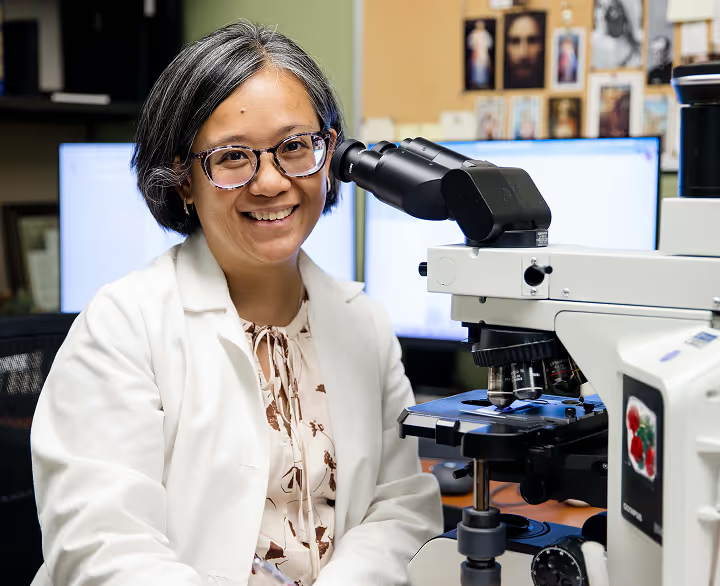
A pathologist is a medical physician similar to a radiologist; however, instead of looking at radiographic films, a pathologist reviews tissue slides and laboratory results. We also are responsible for managing the laboratory to ensure you and your medical team can rely on the results.
What is pathology?
Pathology is a broad term which encompasses all disease processes including tumors, infections, and inflammatory changes that affect your health. Nearly every affliction has a pattern. The medical specialty of pathology is to recognize these patterns and provide insight for other medical specialties to treat the disorder. Pathology is about finding answers to challenging questions such as “is this cancer?” or “what does this lab result mean?”.
Why was a pathologist involved in my care?
If you were in the hospital or had a specimen sent to the lab, a pathologist probably participated in your care. But you most likely never saw him/her at the bedside or in the clinic. A pathologist typically works in the laboratory providing diagnoses to medical providers. Pathologists are often considered to be “the doctor’s doctor”.
What does a pathologist bill for?
Pathologists bill for the interpretation and diagnosis provided for the sample submitted to the lab for evaluation.
Bone Marrow Aspirate and Biopsy
Includes pathologic evaluation of blood smear, bone marrow aspirate, bone core biopsy, bone marrow clot, iron stain of aspirate, reticulin stain of core biopsy. Note: Other studies (special stains, immunohistochemistry, flow cytometry, FISH) may be used to assist with interpretation as needed.
Cytology
Microscopic review of fluids obtained by cervical/vaginal (pap) smear, lumbar puncture, fine needle aspiration, and fluid drains. Note: Other studies (special stains, immunohistochemistry, flow cytometry, FISH) may be used to assist with interpretation as needed.
Flow Cytometry
Interpretation of blood, bone marrow, or body fluids to evaluate for leukemia and lymphoma using targeted antibodies.
Fluorescent In-situ Hybridization (FISH)
Molecular detection technique for analysis of chromosomal aberrancy for detection of lymphomas, leukemias, and therapeutic targets.
Immunofixation/Immunotyping
Detailed evaluation for detection of clonal proteins (heavy and light chain identification)
Malaria/Blood Parasite Smear
Examination of thick and thin blood smears for morphologic evaluation for blood borne parasites
Peripheral Blood Smear
Examination of red and white blood cells and platelets under a microscope to diagnosis blood disorders, blood cancers, and infections.
Serum Protein Electrophoresis
Interpretation of the proteins in blood to diagnosis/monitor multiple myeloma, unexplained bone pain, anemia, proteinuria, chronic kidney disease, and hypercalcemia.
Special Coagulation Work-up
Interpretation of multiple coagulation tests for evaluation of clotting factor deficiencies, factor inhibitors, antiphospholipid antibodies, and inherited thrombophilia.
Specimen Consultation
Interpretation of pathology material previously reviewed at an outside institution (performed upon request of treating provider).
Tissue Pathology
Microscopic and/or gross tissue pathology interpretation. Note: Other studies (special stains, immunohistochemistry, flow cytometry, FISH) may be used to assist with interpretation as needed.
Transfusion Reaction
Detailed assessment of reactions associated with blood product transfusion.

Testimonials
Working with the PACI pathologists has been an exceptional experience. Their professionalism, knowledge of the laboratory and pathology services, and unwavering reliability have made them an invaluable part of our team. Each pathologist is always willing to consult with the laboratory or medical staff, offering clear guidance and practical insight whenever needed. We are so grateful to have such dedicated and dependable pathologists supporting our organization!
As a Lab Director who has collaborated with Pathology Associates of Central Iowa, I’ve consistently been impressed by their professionalism, diagnostic accuracy, and responsiveness. Their team is knowledgeable, approachable, and truly committed to supporting clinical decision-making with timely, high-quality pathology services. Working with them has been a reliable and positive experience.
Dr. Andres has been looking over our lab in Knoxville for the last 10-12 years. He's a valued member of the local medical staff and attends monthly meetings helping to keep us updated on local lab issues as well as presenting information about any MercyOne lab concerns. He's very knowledgeable and easy to get hold of. Our med staff contact him frequently about lab results or path reports and he is quick to respond with a ready answer and ideas for further evaluation if needed. He's been helpful as we've updated our lab and has been a huge resource as we've looked to perform more tests locally over the years. He has good insight regarding what tests could be performed here in Knoxville, and which it's advantageous to send out. Solid, pleasant, reliable, prompt, knowledgeable are the words our med staff used most to describe Dr. Andres.